


Cultivating Boundaries
I’ve been asked to write about boundaries for leaders.
Let’s start with pro-relational boundaries in general.
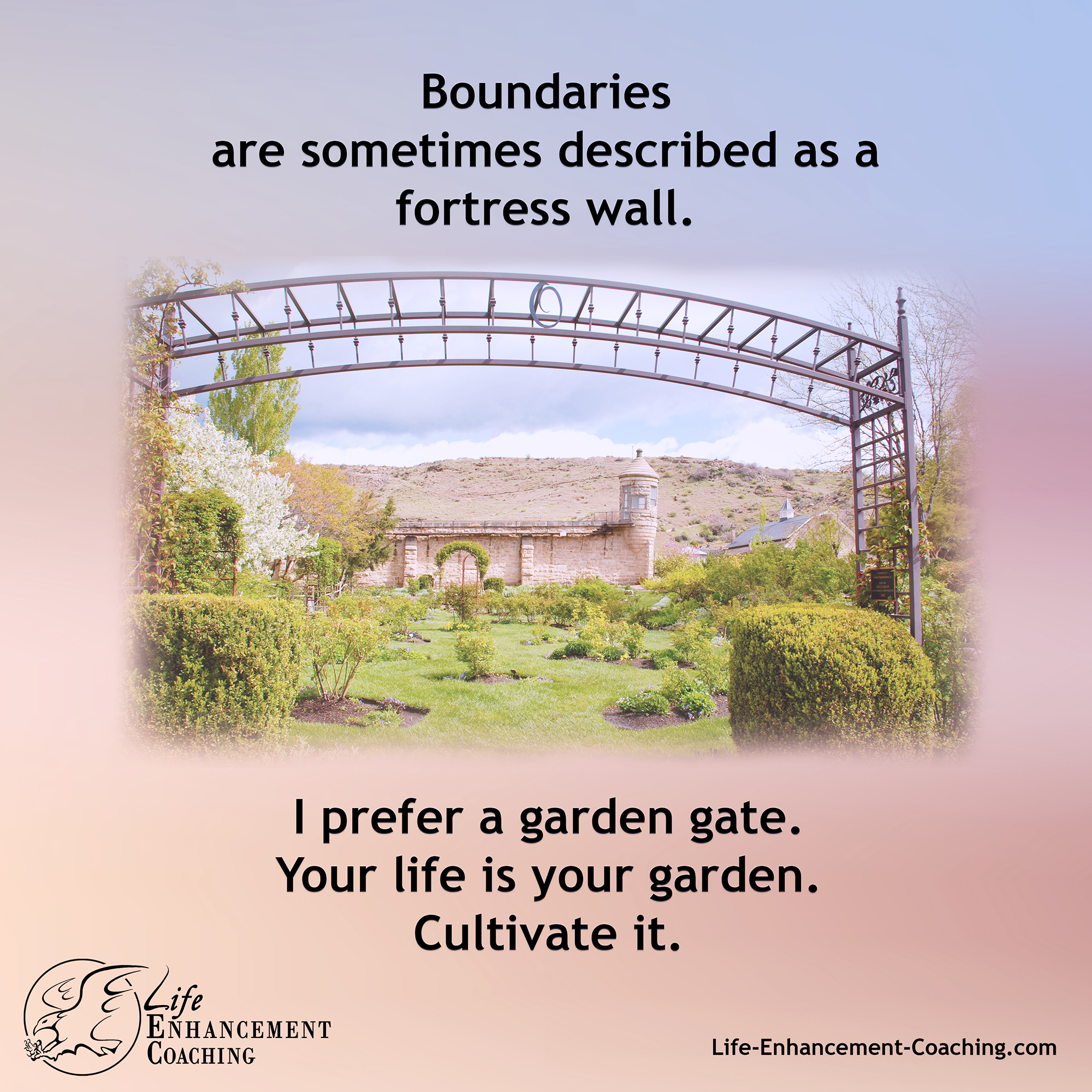
🏰 In self-defense, boundaries are often described as being like a fortress,
nothing passes through without your permission.
That works for self-defense.
Not so much for healthy relationships.
👩🌾 I like the model of boundaries as a garden gate.
Your life is your garden.
You’re cultivating it.
You let through your gate things that nourish your garden.
You keep out things that may harm it.
And you may change this as your circumstances change.
For example, I have guy-friends who ask for “space” when they’re going through difficult times.
Once they’re through it, they let people back in.
As a girl, I wasn’t socialized to do this.
👉 But I can.
It’s like my veggie garden.
In the summertime, I keep the gate closed to keep my chickens out.
In the wintertime, I open the gate and let them in to till the soil, eat emerging weeds and bugs, and fertilize it. 🐔
A client of mine has taken this garden metaphor and run with it.
In every area of his life, he asks:
🌱 “Is this nutritious for my life-garden?”
If not, he doesn’t let it through his gate.
And even then, just like a real garden,
🌦️ too much of a good thing can become harmful.
He also uses the metaphor for “turning 💩 into fertilizer.”
If something harmful gets into his life-garden,
he tries to figure out how to turn it into something useful,
a lesson he can grow from.
Leaders cultivate organizational gardens.
What passes through the gate becomes the culture.
❔ What are you cultivating in your life-garden?
In your organization’s garden?
___
This is the Philosophical Layer of my coaching—how ideas, ethics, and meaning shape leadership.
___
✨ The 21st century needs ADHD Leaders.
If this is you, I want to support you.
💪 Ready to start?
Book a free exploration call.
👀 Just curious?
Comment. DM me. Keep reading my posts.

Explore My Most Popular Themes
If this post landed for you, I’d be honored by your support.
